
Smart Plugs for Ramadan: Automating Iftar and Sehri Meta
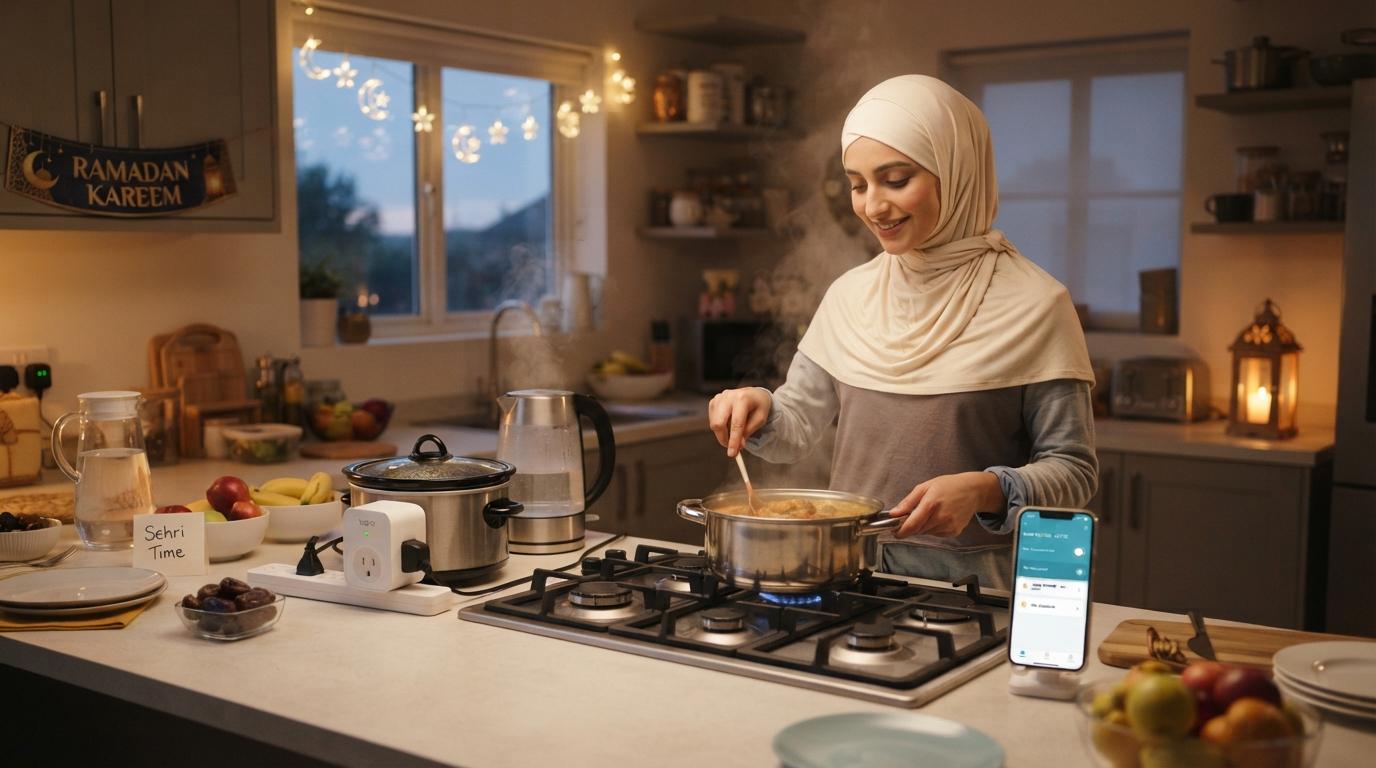
Ramadan's shifted schedule — waking before dawn for sehri, breaking fast at a set time for iftar — creates a genuinely practical use case for smart plug automation that goes beyond a general convenience gadget.
Why Ramadan's Schedule Suits Automation Particularly Well
Unlike a normal day with flexible timing, Ramadan revolves around two fixed daily windows: sehri, before dawn, and iftar, at a precise sunset time that shifts slightly day to day. This kind of predictable, time-sensitive schedule is exactly what smart plug scheduling is designed to handle well.
Automating Sehri Preparation
For households preparing food before dawn, scheduling a rice cooker, kettle, or other kitchen appliance to switch on automatically a set time before your alarm means warm food or water is ready the moment you wake, without needing to fumble with appliances while still half-asleep in the pre-dawn hours.
Automating Iftar Timing
Since iftar time shifts slightly throughout Ramadan (and varies by city), scheduling appliances — a water heater for wudu, or a slow cooker finishing a dish — to align with your specific local iftar time each day removes the need to manually adjust timers daily as the schedule shifts.
Coffee and Tea for Suhoor, Ready on Waking
A smart plug connected to a coffee maker or kettle, scheduled to start brewing shortly before your sehri alarm, is one of the more immediately appreciated conveniences during a season already disrupting normal sleep patterns.
Managing Lighting for Pre-Dawn and Evening Routines
Beyond kitchen appliances, scheduling lights to turn on gently before sehri (easing the transition into a very early wake-up) or automatically as iftar approaches can help mark these transitions without needing to manually manage lighting during an already busy, tiring routine.
Avoiding Food Safety Issues With Scheduled Appliances
It's worth being thoughtful about what you schedule to run unattended — a rice cooker or slow cooker designed for extended unattended operation is a reasonable candidate for scheduling, whereas appliances not designed for unattended use should be treated more cautiously regardless of smart plug convenience.
Adjusting Schedules as Iftar Time Shifts
Since sunset time changes gradually throughout Ramadan, periodically updating your smart plug schedules — rather than setting them once at the start of the month and forgetting about them — keeps automation genuinely aligned with the actual daily iftar time rather than drifting out of sync by several minutes over the course of the month.
Voice Control During a Busy Iftar Preparation
For hands genuinely full during iftar preparation, voice commands through a connected assistant can be more practical than reaching for a phone app mid-cooking — turning on a warming plate or adjusting lighting without stopping what you're doing.
A Simple Ramadan Automation Setup
A reasonable starting setup: one smart plug scheduled for a sehri appliance (kettle, rice cooker), one for an iftar-adjacent appliance (water heater, slow cooker), and simple lighting automation for the pre-dawn and pre-iftar transitions — a modest setup that directly addresses Ramadan's specific, predictable daily rhythm.
Choosing Smart Plugs Suited to Kitchen Appliance Use
Given that kitchen appliances often draw more power than lamps or chargers, checking the amperage rating (16A rather than a lower-rated 10A plug) matters specifically for this use case. A smart plug collection with higher-amperage options suited to kitchen appliances is worth reviewing specifically with Ramadan's kitchen-heavy automation needs in mind.
A Ramadan Automation Checklist
-
Schedule sehri appliances (kettle, rice cooker) to start before your wake-up time
-
Adjust iftar-related schedules periodically as sunset time shifts through the month
-
Choose higher-amperage smart plugs (16A) for kitchen appliance use specifically
-
Only schedule appliances genuinely designed for unattended operation
-
Use voice control for hands-free adjustments during busy iftar preparation
The Line
Ramadan's predictable but shifted daily schedule is one of the more genuinely practical, season-specific use cases for smart plug automation — a small setup investment that directly eases two of the more tiring transitions in an already demanding month.

 English
 Arabic
 French
 Spanish
 Portuguese
 Deutsch
 Turkish
 Dutch
Dutch
 Russian
 Romaian
 Portuguese (Brazil)
 Greek
Greek
