
When Should Cooling Circuits Be Reviewed in a Gangnammould Crate Box Mould
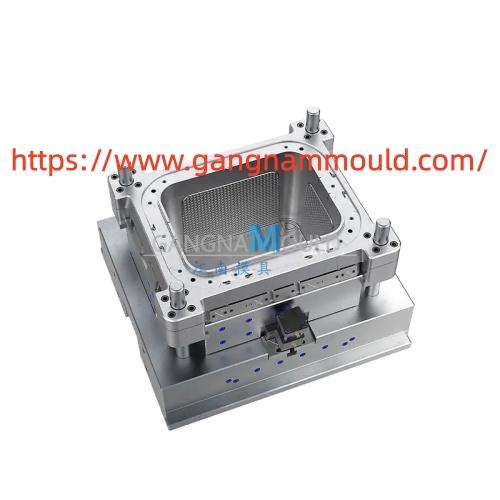
Crate Box Mould performance relies on how effectively heat is removed once molten material fills the cavity. Uneven temperature distribution creates residual stress, local shrinkage differences, and surface marks that cause variation from one cycle to the next. A carefully arranged cooling network extracts heat at controlled rates so that every section of the part solidifies under similar conditions. This uniformity is the foundation of repeatable output.
The layout of channels must follow the geometry of the part. Thicker wall zones require closer spacing or larger diameter passages to compensate for their greater thermal mass. Thinner sections need moderate cooling so they do not freeze too early and interrupt material flow. When these zones are balanced the entire part reaches ejection temperature together, reducing the chance of distortion once the tool opens. Flow rate and fluid temperature further refine the process. Excessively high flow can create pressure drops that starve distant channels, while low flow allows heat to accumulate in critical areas.
Modern approaches often combine conventional drilled lines with conformal routes that track the cavity surface more closely. The shorter heat path shortens the overall cycle without forcing aggressive process settings. Sensors placed at strategic points provide continuous feedback so operators can adjust pump speed or inlet temperature before quality drifts. Simulation software used during the design stage predicts temperature maps and identifies potential problem zones before any metal is cut.
The thermal conductivity of the tool steel itself influences how quickly heat reaches the circulating fluid. Materials that transfer heat efficiently allow moderate flow rates to achieve the required cooling effect, lowering pump energy demand and reducing the risk of erosion inside the passages. Surface treatments on the channel walls resist scale and corrosion that would otherwise restrict flow after months of continuous use. Regular flushing and filtration keep the circuit clear and maintain the original heat transfer capacity.
Cycle consistency brings practical advantages beyond part appearance. When solidification proceeds at a steady rate the mechanical properties of the formed plastic remain uniform. Stackable carriers that must support repeated loads benefit from this stability because residual stress is minimized. Factories that monitor cooling performance typically observe fewer dimensional outliers and a more predictable daily yield of transport receptacles.
Energy consumption is another measurable factor. An efficient network reaches the target temperature with less fluid volume and lower system pressure. Over extended production campaigns these savings accumulate and free capacity on central chillers for other machines on the floor. Documentation of inlet outlet temperatures and flow readings creates a baseline that speeds troubleshooting when output begins to vary.
Gangnammould incorporates these principles when planning temperature control circuits for logistics container tooling. Heat flow analysis precedes machining so that every critical zone receives adequate capacity. The resulting designs support stable cycles and reliable part quality across long production schedules.
Maintenance routines form the final link in the chain. Filters, flow meters, and scheduled inspections prevent gradual restriction that would otherwise appear as progressive dimensional drift. Simple daily comparison of inlet and outlet readings often reveals developing issues before they affect a full shift of parts.
Attention to cooling therefore translates directly into process reliability. Small refinements in channel spacing, diameter, or fluid temperature can expand the stable operating window and reduce the frequency of adjustments during a run. Plants that treat the temperature control system as a core design element rather than an accessory experience smoother daily output and fewer interruptions caused by heat related defects.
Detailed options for temperature management solutions suited to logistics container tooling are available at https://www.gangnammould.com/

 English
 Arabic
 French
 Spanish
 Portuguese
 Deutsch
 Turkish
 Dutch
Dutch
 Italiano
 Russian
 Romaian
 Greek
Greek
